
Google-Extended vs Googlebot: Separate Search from Gemini Use
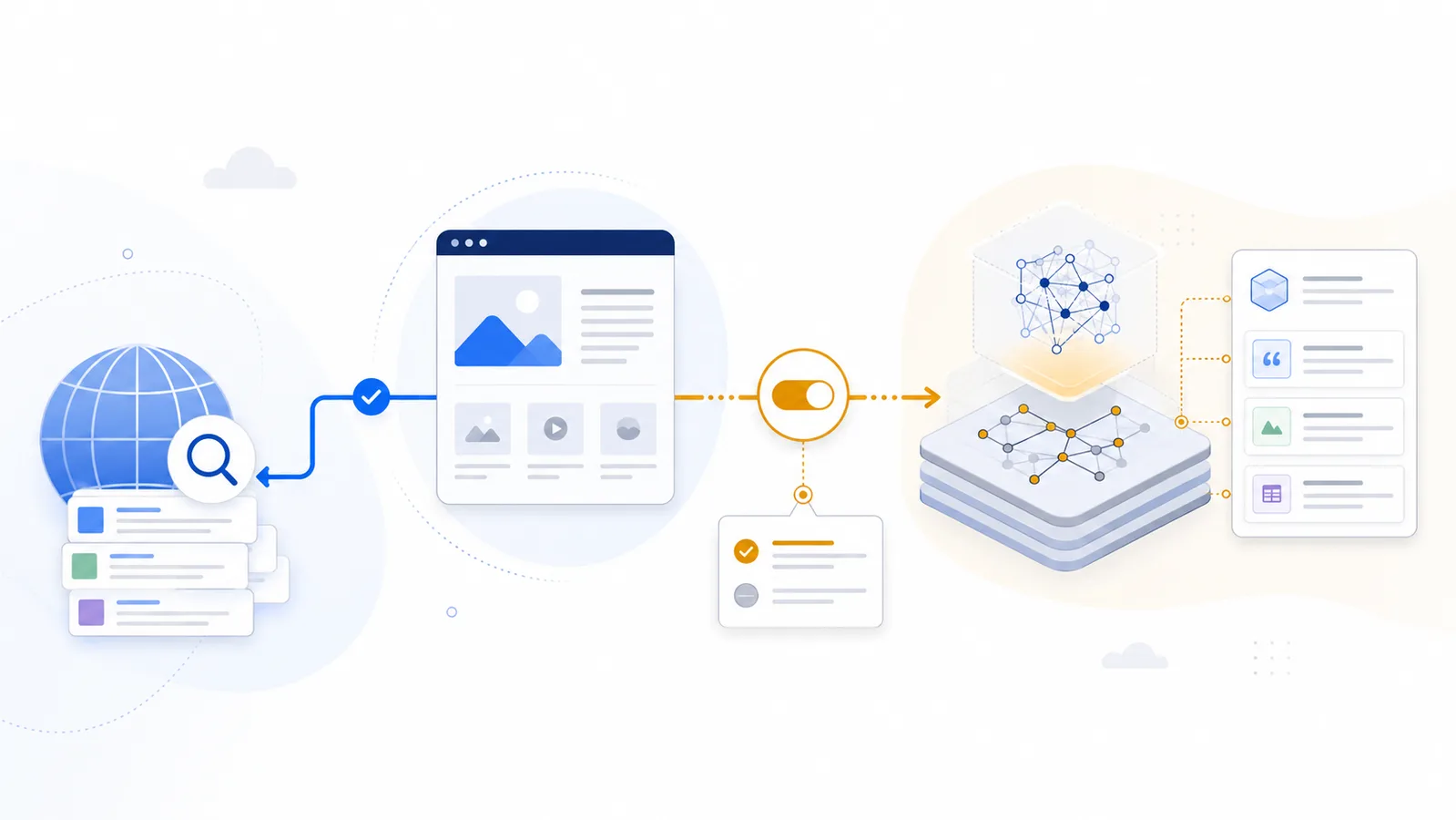
Googlebot is the crawler used for Google Search and related search features. Google-Extended is a standalone robots.txt control token, not a separate HTTP crawler identity; it governs whether Google-crawled content may be used for Gemini model training and grounding. You can allow Googlebot while disallowing Google-Extended without opting out of Google Search.
Copy-paste robots.txt example
User-agent: Googlebot
Allow: /

User-agent: Google-Extended
Disallow: /
The two tokens control different outcomes
Googlebot and Google-Extended appear in robots.txt, but they do not describe two equivalent crawlers. Googlebot is the familiar web crawler used to discover and refresh content for Google Search. Google-Extended is a product control token that tells Google whether content it has crawled may be used for specified Gemini training and grounding purposes.
This separation lets publishers keep ordinary search visibility while opting out of the extended AI uses covered by the token.
What Googlebot controls
Rules addressed to Googlebot affect crawling for Google Search, including Search features such as Discover and several dependent surfaces. Blocking Googlebot can prevent Google from fetching page content and resources. It is therefore a major SEO decision, not a narrow AI preference.
Robots.txt manages crawling, not guaranteed removal from the index. A blocked URL may still be discovered through links and displayed without a normal snippet. Use an appropriate noindex directive on a crawlable page, authentication, or removal tooling when exclusion from search results is the actual goal.
What Google-Extended controls
Google-Extended does not have a separate HTTP user-agent string. Google explains that crawling is performed with existing Google user agents and the token works in a control capacity. The preference applies to use of crawled content for training future Gemini models and for grounding in specified Gemini and Vertex AI experiences.
Google also states that Google-Extended does not affect inclusion in Google Search and is not a Google Search ranking signal. You should not expect to find a distinct “Google-Extended” crawler in access logs.
Allow Search and opt out of extended use
The common selective policy is straightforward:
User-agent: Googlebot
Allow: /

User-agent: Google-Extended
Disallow: /
The first group leaves Google Search crawling available. The second records your preference for the uses covered by Google-Extended. Keep the groups separate and avoid a wildcard rule such as User-agent: * Disallow: /, which would request that all compliant crawlers stay out.
Why log analysis can be confusing
Because Google-Extended is not a separate request identity, a log entry from Googlebot does not tell you whether the fetched content will later be considered under the Google-Extended preference. Evaluate the published robots.txt configuration rather than trying to block a nonexistent HTTP user-agent string at the firewall.
When validating genuine Google crawler traffic, use Google’s documented reverse-DNS or published-IP verification process. A client can copy the text “Googlebot” into its header.
Check the policy safely
- Keep Googlebot open if organic search visibility matters.
- Add a dedicated Google-Extended group for the AI-use preference.
- Publish the file at the root of each relevant host.
- Validate it with the robots.txt checker.
- Revisit Google’s crawler documentation when product coverage changes.
For a multi-provider version of this policy, use Allow AI Search but Block AI Training.
FAQ
Is Google-Extended a separate crawler in server logs?
No. Google says Google-Extended has no separate HTTP user-agent string. Existing Google user agents perform the crawling, while Google-Extended acts as a robots.txt control token.
Does blocking Google-Extended block Google Search?
No. Google states that Google-Extended does not affect inclusion in Google Search and is not used as a Search ranking signal. Keep Googlebot allowed if search visibility matters.
What does Google-Extended currently control?
It controls whether Google-crawled content may be used for training future Gemini models and for grounding in specified Gemini Apps and Vertex AI experiences.
Can I block Googlebot but allow Google-Extended?
You can write those groups, but blocking Googlebot prevents normal Search crawling and may leave Google with little or no newly fetched content to which an extended-use preference could apply. The usual selective policy is the reverse.
Can I identify Google-Extended traffic by IP address?
Not as a separate crawler category. Validate genuine Google crawler traffic using Google’s published verification methods, but evaluate Google-Extended through the robots.txt token rather than a dedicated request identity.
 AI Crawler List
 Google-Extended robots.txt Control for Gemini
 How to Allow AI Search but Block AI Training
 robots.txt for AI Training: Build a Selective Opt-Out
 robots.txt for AI Search: Discovery Crawler Guide